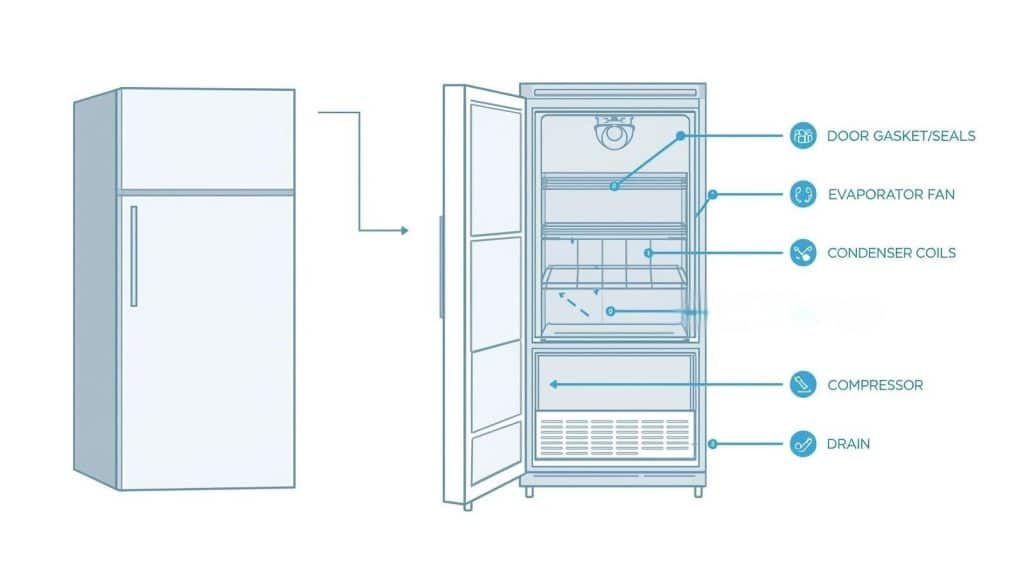
In Singapore’s food and beverage industry, commercial refrigerators play a crucial role in maintaining food safety, freshness, and compliance with local regulations. A minor cooling issue or faulty seal can quickly turn into a costly problem — leading to product spoilage, downtime, and even non-compliance with Singapore Food Agency (SFA) standards.
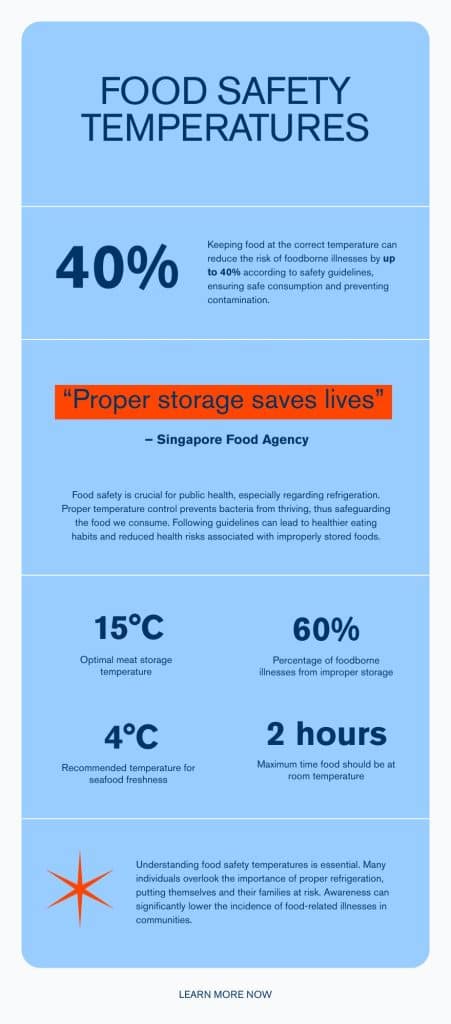
Keeping your refrigeration units within safe temperature ranges — 0°C to 4°C for chillers and –18°C or below for freezers — is vital to prevent food entering the 5°C–60°C “danger zone”, where bacterial growth accelerates. Regular maintenance and early detection of mechanical issues not only protect your inventory but also extend the lifespan of your commercial fridge.
In this guide, we’ll walk you through the top 10 common issues in commercial refrigerators, how to identify them early, DIY fixes, and when to call a professional technician in Singapore. You’ll also learn essential tips on preventing compressor failure, prolonging gasket life, and maintaining your unit for consistent performance.
Why Is My Commercial Refrigerator Leaking Water?
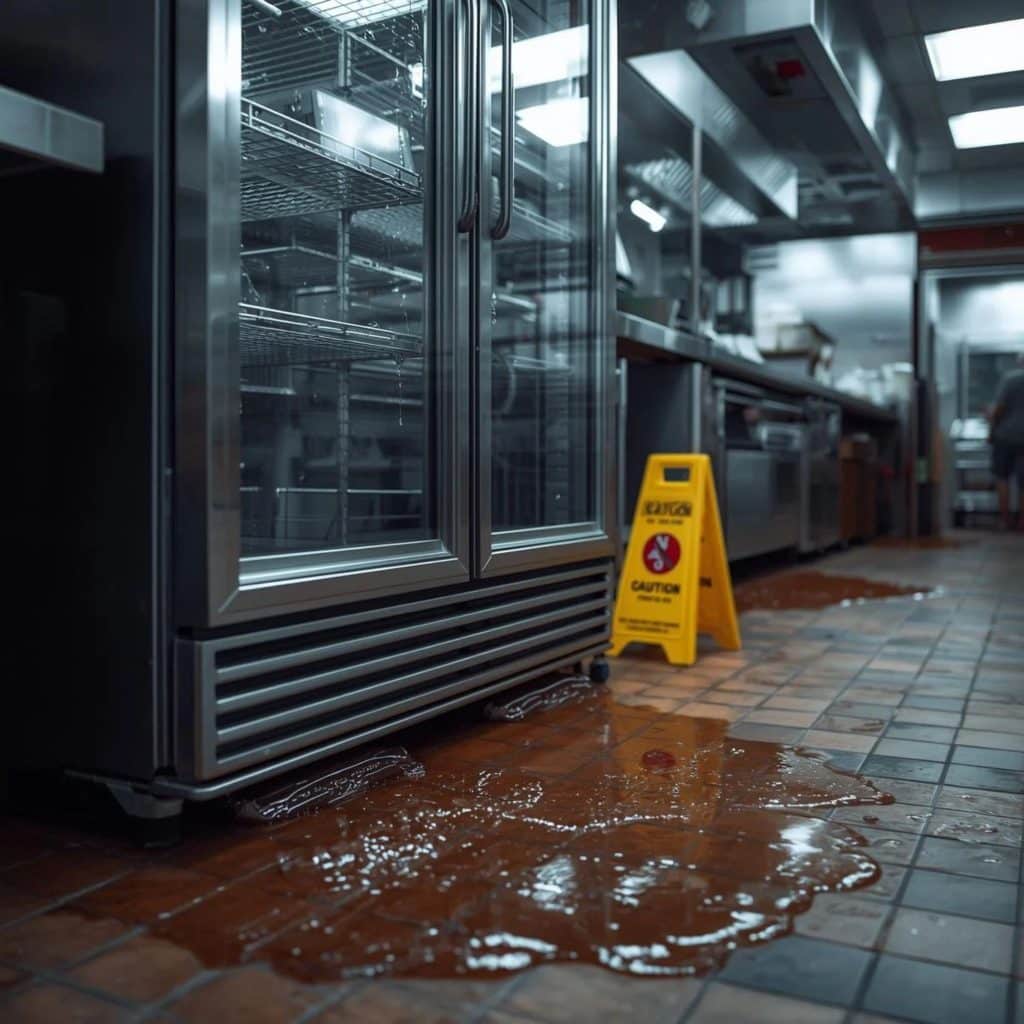
Water leaks from a commercial refrigerator can create both safety and hygiene issues in your kitchen. Puddles on the floor not only pose a slipping hazard but can also be an early sign of a deeper problem such as a blocked drain, condensation buildup, or poor insulation. In humid climates like Singapore, these issues can appear frequently if preventive maintenance is neglected.
How to Detect a Water Leak
Watch out for these signs:
Puddles forming under or behind the refrigerator.
Musty odours caused by standing water or mold growth.
Visible condensation on interior walls or near the door frames.
The drain pan filling faster than usual or overflowing.
If leaks appear intermittently, especially after heavy use or defrost cycles, it likely points to drainage or humidity control issues.
Why It Happens
Common causes include:
Clogged or frozen drain tubes blocking defrost water from flowing to the drip pan.
Cracked or misaligned drain pans leading to overflow.
High humidity environments, common in Singapore kitchens, causing excessive condensation.
Improper leveling, which prevents water from draining correctly.
Damaged door gaskets allowing warm, moist air to enter and condense on cold surfaces.
How to Fix Water Leak in Refrigerators
Turn off the unit and unplug it safely before inspection.
Locate and clear the drain tube using a flexible brush or warm water flush.
Clean and disinfect the drain pan to eliminate bacteria and odours.
Ensure the refrigerator is level by adjusting its front legs.
Replace any cracked pans or damaged seals immediately.
Check ambient humidity—install a dehumidifier if condensation is excessive.
How to Prevent Water Leaking From Commercial Fridge?
Include drain and pan cleaning in your monthly maintenance checklist.
Schedule professional inspections every 6–12 months for coil and drain line checks.
Maintain adequate ventilation around the unit to reduce humidity buildup.
Avoid storing open liquids inside, as they contribute to excess moisture.
Regularly inspect gaskets and door alignment to prevent warm air infiltration.
Addressing leaks quickly not only keeps your kitchen safe and hygienic but also prevents potential electrical hazards and compressor strain. Consistent upkeep ensures compliance with Singapore’s food hygiene regulations and protects your cold chain operations from costly downtime.
Why Does My Commercial Refrigerator Have Temperature Fluctuations?
Temperature fluctuations are one of the most common and frustrating issues faced by food businesses in Singapore. When your chiller or freezer struggles to maintain a stable temperature, it can directly impact food safety compliance under SFA regulations and result in costly product spoilage.
How to Detect Temperature Fluctuations
You can spot early signs of temperature inconsistency by:
Checking if your fridge display shows irregular readings or sudden spikes.
Using a data logger or recording thermometer, as required by the Singapore Food Agency (SFA), to verify and record temperatures over time.
Observing uneven cooling — for instance, one section of your fridge may feel colder while another is warm.
Monitoring product texture or thawing in freezers, which often indicates temperature instability.
Why It Happens
Several mechanical and operational factors can cause temperature fluctuations:
Overstocking the unit blocks airflow, preventing even cooling.
Damaged door gaskets allow warm air to seep in.
Faulty thermostats or sensors send incorrect temperature signals.
Frequent door openings, especially during peak hours, allow warm air to enter and strain the compressor.
How to Fix Refrigerator Temperature Fluctuations
Clean the condenser coils using a brush or vacuum every 3–6 months.
Avoid overloading — leave 5–10 cm space for proper air circulation.
Check the door seals for tears or gaps.
Calibrate or replace the thermostat/sensor if readings are inconsistent.
Maintain proper ventilation around the unit — ensure at least 15–30 cm clearance from walls.
How to Prevent Fridge Temperature Fluctuations
Implement a daily temperature log system (as required by NEA and SFA for regulated facilities).
Schedule quarterly preventive maintenance with a certified refrigeration technician.
Train staff to minimize unnecessary door openings.
Keep the storage area’s ambient temperature within manufacturer specifications.
Maintaining stable temperatures not only preserves food quality but also ensures compliance with Singapore’s cold chain standards such as SS 668, which sets best practices for chilled and frozen food storage.
Why Are the Door Gaskets and Seals on My Commercial Refrigerator Wearing Out So Quickly?
Door gaskets and seals wear out quickly because they experience constant pressure, temperature changes, and frequent door openings. In busy commercial kitchens, grease, dirt, and cleaning chemicals can also degrade the rubber material. Once the gasket loses its elasticity or forms small cracks, it no longer creates an airtight seal — forcing the compressor to overwork, increasing energy consumption, and compromising food safety.
How to Detect Gasket Wear
You can easily check for gasket problems using the “dollar-bill test” — close the door on a piece of paper and try pulling it out. If it slides out easily, the seal is weak. Other signs include condensation around the door frame, frost buildup near the hinges, or warm air entering the cabinet.
Why It Happens
Frequent door use in high-traffic kitchens wears out seals prematurely.
Harsh cleaning agents break down rubber materials over time.
Misaligned doors or bent hinges stretch the gasket unevenly.
High ambient humidity in Singapore accelerates rubber deterioration.
Improper installation or low-quality aftermarket seals reduce longevity.
How to Fix It
Clean the gasket with mild soap and warm water to remove grease and debris.
Realign the door if it’s sagging or uneven.
Use a hairdryer or heat gun on low setting to soften and reshape minor warping.
Replace torn or cracked seals with OEM-approved gaskets for your refrigerator model.
Lubricate the gasket lightly with silicone grease to maintain flexibility.
How to Extend the Life of Door Gaskets and Seals
Clean seals weekly with a mild detergent — avoid alcohol or chlorine-based cleaners.
Keep door hinges tight and aligned to reduce uneven pressure.
Train staff to close doors gently rather than slamming them.
Inspect gaskets during monthly maintenance checks and replace them every 12–18 months, depending on usage.
Maintain proper humidity control in storage areas to reduce condensation stress on seals.
Properly maintained gaskets keep your refrigerator energy-efficient, reduce compressor strain, and ensure consistent cooling — all of which are essential for maintaining compliance with SFA cold storage standards in Singapore.
Why Is My Commercial Refrigerator’s Compressor Failing or Overheating?
A failing or overheating compressor is one of the most serious problems a commercial refrigerator can face. The compressor acts as the “heart” of your cooling system, circulating refrigerant to maintain proper temperature. When it struggles or fails, your refrigerator cannot cool efficiently, leading to food spoilage, downtime, and high repair costs.
How to Detect Compressor Failure
Early detection can save you from major breakdowns. Look out for these warning signs:
The refrigerator is running continuously but not cooling effectively.
Clicking or buzzing noises when starting up (a sign of hard starts).
Overheating at the back or bottom of the unit where the compressor sits.
Tripped circuit breakers or unusual power consumption.
Oil stains or refrigerant leaks near compressor connections.
Why It Happens
Dirty condenser coils causing excessive pressure and heat buildup.
Low refrigerant levels due to leaks, making the compressor work harder.
Electrical issues like faulty start relays or capacitors.
Poor ventilation, especially in tight Singapore kitchens with limited airflow.
Age and wear, as compressors typically last 7–10 years under heavy use.
How to Detect and Prevent Compressor Failure in Commercial Refrigerators
To detect early failure:
Monitor for unusual noises, frequent cycling, or sudden temperature spikes.
Use a digital thermometer and note prolonged recovery times after door openings.
Check for discoloration or burnt smells near electrical components.
To prevent compressor failure:
Clean condenser coils every 3–6 months to prevent heat buildup.
Ensure proper ventilation — leave at least 15–30 cm clearance around the unit.
Schedule annual inspections with an NEA-certified technician to test electrical load and refrigerant pressure.
Avoid overloading the refrigerator, as restricted airflow stresses the system.
Maintain a stable ambient temperature in the kitchen or storage area.
When to Call a Professional
If the compressor is hot to touch, the refrigerator stops cooling, or breakers trip repeatedly, contact a licensed commercial refrigeration technician immediately. Attempting to repair sealed-system components without certification may violate NEA refrigerant handling regulations in Singapore.
Why Is My Commercial Refrigerator’s Condenser Coil Dirty or Overheating?
A dirty condenser coil restricts airflow and prevents the system from releasing heat efficiently. This causes the compressor to run longer, consume more electricity, and overheat. Over time, the buildup of grease and dust — common in Singapore’s humid commercial kitchens — can lead to system failure.
How to Detect a Dirty Condenser Coil
The refrigerator feels hot to the touch around the sides or back.
You hear louder compressor noises or extended cooling cycles.
Temperatures fluctuate even though the settings are unchanged.
There’s a noticeable increase in energy bills without added workload.
How to Fix It
Unplug the unit and remove the front or back panel to access the coil.
Use a coil brush or vacuum to remove dust and debris.
For greasy buildup, apply a commercial coil cleaner and rinse gently.
Ensure fans are spinning freely and not obstructed.
Wipe surrounding areas to prevent future dust accumulation.
How to Prevent It
Clean coils quarterly or more often in kitchens with heavy grease or dust.
Maintain clear airflow space (15–30 cm) around the refrigerator.
Install air filters or grease traps in ventilation areas if possible.
Schedule bi-annual professional maintenance to check coil temperature and performance.
Clean condenser coils are vital for energy efficiency, compressor health, and consistent cooling — especially in high-demand Singapore kitchens where refrigerators run continuously.
Why Is My Commercial Refrigerator’s Compressor Failing or Overheating?
A failing or overheating compressor is one of the most serious problems a commercial refrigerator can face. The compressor acts as the “heart” of your cooling system, circulating refrigerant to maintain proper temperature. When it struggles or fails, your refrigerator cannot cool efficiently, leading to food spoilage, downtime, and high repair costs.
How to Detect Compressor Failure
Early detection can save you from major breakdowns. Look out for these warning signs:
The refrigerator is running continuously but not cooling effectively.
Clicking or buzzing noises when starting up (a sign of hard starts).
Overheating at the back or bottom of the unit where the compressor sits.
Tripped circuit breakers or unusual power consumption.
Oil stains or refrigerant leaks near compressor connections.
Why It Happens
Dirty condenser coils causing excessive pressure and heat buildup.
Low refrigerant levels due to leaks, making the compressor work harder.
Electrical issues like faulty start relays or capacitors.
Poor ventilation, especially in tight Singapore kitchens with limited airflow.
Age and wear, as compressors typically last 7–10 years under heavy use.
How to Detect and Prevent Compressor Failure in Commercial Refrigerators
To detect early failure:
Monitor for unusual noises, frequent cycling, or sudden temperature spikes.
Use a digital thermometer and note prolonged recovery times after door openings.
Check for discoloration or burnt smells near electrical components.
To prevent compressor failure:
Clean condenser coils every 3–6 months to prevent heat buildup.
Ensure proper ventilation — leave at least 15–30 cm clearance around the unit.
Schedule annual inspections with an NEA-certified technician to test electrical load and refrigerant pressure.
Avoid overloading the refrigerator, as restricted airflow stresses the system.
Maintain a stable ambient temperature in the kitchen or storage area.
When to Call a Professional
If the compressor is hot to touch, the refrigerator stops cooling, or breakers trip repeatedly, contact a licensed commercial refrigeration technician immediately. Attempting to repair sealed-system components without certification may violate NEA refrigerant handling regulations in Singapore.
Why Is the Evaporator Fan in My Commercial Refrigerator Making Noise or Not Working?
If your commercial refrigerator starts making unusual noises or struggles to maintain even cooling, the evaporator fan could be the culprit. This fan circulates cold air throughout the cabinet, ensuring consistent temperature. When it malfunctions, certain areas may freeze while others warm up — putting stored food at risk.
How to Detect an Evaporator Fan Problem
You hear grinding, rattling, or squealing noises from inside the cabinet.
Some shelves or compartments feel warmer than others.
Ice forms on the evaporator coil, restricting airflow.
The fan doesn’t spin when the compressor is running.
You notice poor air circulation even though the fridge appears operational.
Why It Happens
Ice buildup blocking the fan blades.
Worn-out fan motor bearings causing noise or friction.
Electrical faults in the motor wiring or control board.
Overstocking products directly in front of vents.
Lack of routine cleaning, leading to dust or debris in fan housings.
How to Fix It
Unplug the unit before inspecting.
Remove the interior panel to access the evaporator fan area.
If there’s ice buildup, defrost the section completely.
Clean the blades using a soft brush and check for obstructions.
If the motor hums but doesn’t spin, it may need replacement by a technician.
How to Prevent It
Keep air vents clear and avoid overpacking shelves.
Conduct monthly checks for dust, frost, and debris.
Clean the evaporator housing quarterly as part of preventive maintenance.
Have a professional technician inspect fans annually to ensure balance and motor efficiency.
A healthy evaporator fan ensures even temperature distribution and prevents frost accumulation, helping maintain food safety and reducing compressor load.
Why Is My Commercial Refrigerator Building Up Ice or Frost?
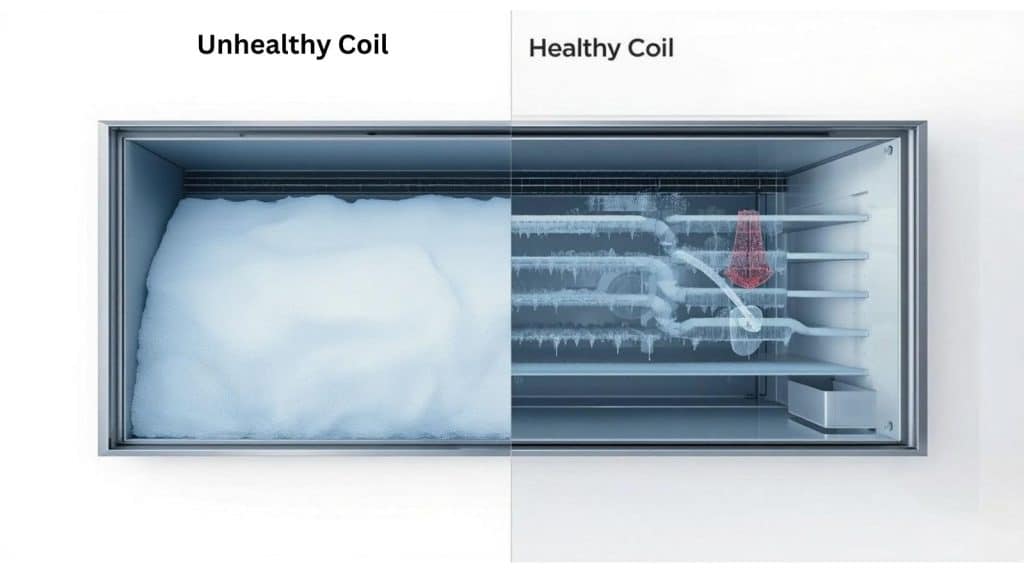
Ice or frost buildup inside a commercial refrigerator is a clear sign that your unit is not defrosting properly or is allowing too much moisture inside. While a thin layer of frost is normal in freezers, excessive accumulation on coils, walls, or around doors reduces cooling efficiency and strains the compressor, leading to higher energy bills and premature component failure.
How to Detect Ice Build-Up in Commercial Fridge
You’ll usually notice:
Thick frost or ice sheets forming on the evaporator coils or back walls.
Water droplets refreezing near the door seals.
A warm cabinet even though the compressor is running continuously.
Increased electricity usage or longer run times.
If you start noticing frost within days of manual defrosting, there’s likely an airflow or sealing issue that needs attention.
Why It Happens
Common causes include:
Frequent door openings, especially during peak kitchen hours, allowing humid air to enter.
Damaged or loose door gaskets failing to create a tight seal.
Blocked drain lines or faulty defrost heaters preventing meltwater from escaping.
Improper product loading — items stacked too close to the evaporator fan restrict air movement.
Malfunctioning defrost timer or sensor, which interrupts the automatic defrost cycle.
How to Fix Ice Build-Up in Commercial Fridge
Manually defrost the refrigerator by turning it off and letting the ice melt completely.
Check and clean drain tubes to ensure proper water flow.
Inspect and replace faulty door gaskets that may be letting in moist air.
Verify the defrost cycle settings according to the manufacturer’s manual.
Avoid blocking vents and maintain airflow clearance between stored items.
How to Prevent It
Set up routine coil inspections as part of your preventive maintenance plan.
Train staff to close doors promptly after each use.
Keep the ambient humidity in the storage area under control.
Ensure defrost cycles are functioning correctly and adjust frequency based on workload.
Schedule quarterly servicing with an NEA-certified refrigeration technician to check defrost timers and sensors.
Proper frost control improves energy efficiency and reduces the risk of compressor stress — extending the lifespan of your commercial refrigerator and ensuring compliance with Singapore’s food safety and cold chain standards.
Why Isn’t My Commercial Refrigerator Maintaining the Correct Thermostat or Sensor Readings?
When your commercial refrigerator’s temperature display doesn’t match actual cabinet conditions, the issue often lies with a faulty thermostat or sensor. These components monitor internal temperature and signal the compressor when to turn on or off. Any malfunction here can lead to inconsistent cooling, wasted energy, or spoiled inventory.
How to Detect Thermostat or Sensor Issues
The displayed temperature doesn’t match actual thermometer readings.
The unit runs constantly or fails to cycle on at all.
Fluctuations occur despite no changes in door openings or loading.
Warning lights or error codes appear on the control panel.
Compare readings using a reliable thermometer placed inside the cabinet.
Calibrate the thermostat or replace faulty sensors as per the manufacturer’s guide.
Inspect and clean electrical contacts to remove corrosion.
If errors persist, have a technician test the control board for faults.
How to Prevent It
Perform annual sensor calibration checks.
Keep the sensor probe clear of frost and food items.
Record daily temperature logs to catch irregular patterns early.
Schedule routine maintenance for electrical inspection.
Accurate thermostat and sensor operation ensures consistent cooling and helps businesses in Singapore meet SFA temperature monitoring requirements.
Why Is My Commercial Refrigerator Leaking Refrigerant or Losing Cooling Power?
Refrigerant leaks are among the most critical issues in commercial refrigeration systems. The refrigerant is what absorbs and transfers heat to keep your fridge cold — if it escapes, the system loses cooling efficiency, the compressor overworks, and your energy costs spike. Left untreated, a leak can lead to complete compressor failure and food safety violations under Singapore’s cold storage regulations.
How to Detect a Refrigerant Leak
The refrigerator runs continuously but fails to maintain the set temperature.
You see oily residue or stains on copper tubing or joints.
Hissing sounds may come from behind or under the unit.
Ice builds up on the evaporator coils even though the fridge isn’t cold enough.
Food spoils faster, or temperature logs show gradual warming over several days.
Why It Happens
Loose connections or vibration stress causing micro-cracks in copper lines.
Corrosion due to moisture and cleaning chemicals.
Poor servicing or improper installation leading to weak joints.
Wear and tear on older systems using high-pressure refrigerants.
Accidental punctures during coil cleaning or maintenance.
How to Fix It
Refrigerant handling is not a DIY task — only NEA-certified refrigeration technicians in Singapore are legally allowed to perform these repairs. Here’s what typically happens:
The technician conducts a leak test using nitrogen or electronic detectors.
Damaged tubing or joints are repaired or replaced.
The system is evacuated and recharged with the correct refrigerant type and pressure.
A performance test confirms stable cooling and compressor health.
How to Prevent It
Schedule bi-annual maintenance with a licensed technician to check refrigerant pressure and line integrity.
Keep the refrigerator stable and level to minimize vibration.
Avoid using sharp tools during coil cleaning.
Ensure proper ventilation around the compressor area to reduce system stress.
Replace aging units or retrofit them to newer, eco-friendly refrigerants in compliance with Singapore’s HFC control measures.
A refrigerant leak doesn’t just affect performance — it can also impact environmental safety and regulatory compliance. Regular inspections protect your business from unexpected downtime and potential fines.
Why Is My Commercial Refrigerator Making Loud Noises or Vibrating Excessively?
Unusual noises or vibrations from your commercial refrigerator often signal mechanical wear, loose components, or compressor issues. Ignoring them can lead to structural damage or motor failure, especially in high-usage environments such as restaurants and supermarkets.
How to Detect Noise and Vibration Problems
You hear rattling, buzzing, or grinding sounds when the unit cycles on or off.
The refrigerator shakes or vibrates against walls or nearby equipment.
Screws or panels appear loose over time.
Vibrations seem louder when the compressor activates.
Why It Happens
Unbalanced refrigerator position on uneven flooring.
Loose mounting bolts or fan blades.
Worn-out compressor mounts or motor bearings.
Objects or shelving touching the refrigerator exterior, amplifying sound.
How to Fix It
Level the refrigerator using adjustable feet or rubber shims.
Tighten loose screws, panels, and fan brackets.
Inspect compressor mounts and replace worn components if necessary.
Use anti-vibration pads under the unit to reduce noise transfer.
Remove nearby objects that might rattle when the fridge operates.
How to Prevent It
Include a hardware inspection in your quarterly maintenance schedule.
Train staff to report new or louder noises immediately.
Place refrigerators on flat, stable surfaces and avoid crowding around them.
Have a professional check fan balance and compressor mounts annually.
Promptly addressing vibration and noise issues prevents long-term mechanical stress and maintains a safe, quiet workspace — especially important in food service environments where operational reliability is crucial.
When Should I Call a Professional for Commercial Refrigerator Repair?
While regular maintenance and simple troubleshooting can prevent most refrigeration problems, there are times when it’s best — and safest — to call a professional technician. Complex issues such as compressor failure, refrigerant leaks, or electrical malfunctions require certified expertise and the right diagnostic tools. In Singapore, engaging an NEA-certified refrigeration service provider like KNQFATT Refrigeration ensures your equipment is repaired according to local safety and environmental standards.
Situations That Require Professional Help
Call a qualified technician from KNQFATT Refrigeration immediately if you experience any of the following:
The refrigerator isn’t cooling despite running continuously.
You suspect a refrigerant leak (indicated by oil stains, hissing, or low pressure).
The compressor is overheating, tripping breakers, or making unusual noises.
The evaporator or condenser coils are freezing or frosting rapidly.
Electrical components (thermostats, relays, sensors) are malfunctioning.
There’s persistent water leakage or drainage issues after cleaning.
The refrigerator fails to meet SFA temperature standards (0–4 °C for chillers, ≤ –18 °C for freezers).
Why Choose a Professional Like KNQFATT Refrigeration
Expertise: Their technicians are NEA-trained and certified in refrigerant handling, ensuring repairs comply with Singapore’s HFC control regulations.
Rapid response: KNQFATT offers 24/7 emergency refrigeration repair — crucial for restaurants, supermarkets, and cold storage operators where downtime means spoilage.
Preventive service: They provide routine maintenance programs, including coil cleaning, temperature calibration, and gasket replacement, to extend equipment lifespan.
Parts & reliability: They stock OEM-quality parts for major brands and guarantee workmanship, reducing the risk of repeat failures.
What You Should Prepare Before Calling
To speed up the repair process:
Record the model, serial number, and age of your refrigerator.
Note error codes or warning lights on the control panel.
Keep temperature logs and recent maintenance records handy.
Ensure safe access to the refrigerator for inspection and servicing.
Preventive Maintenance Tip
Even when your refrigerator seems to be running smoothly, scheduling quarterly preventive maintenance with KNQFATT Refrigeration helps detect early signs of wear — like compressor strain, gasket leaks, or coil blockages — before they turn into costly breakdowns. This proactive approach keeps your business compliant, energy-efficient, and operational year-round.
For dependable commercial refrigeration repair and maintenance across Singapore, KNQFATT Refrigeration is a trusted local partner known for technical excellence and fast response times.
How Can Preventive Maintenance Extend the Lifespan of Your Commercial Refrigerator?
Preventive maintenance is the key to keeping your commercial refrigerator performing efficiently and avoiding costly breakdowns. In Singapore’s hot and humid climate, refrigerators run under constant stress — which means regular inspection, cleaning, and servicing are not optional but essential. Partnering with a reliable service provider like KNQFATT Refrigeration ensures your equipment operates safely, complies with SFA standards, and lasts for many years.
Why Preventive Maintenance Matters
Commercial refrigerators typically operate 24/7. Without routine care, dust buildup, door seal wear, and component fatigue can cause gradual performance loss. Preventive maintenance helps:
Reduce energy consumption by keeping coils and fans clean.
Prevent sudden breakdowns through early detection of mechanical faults.
Maintain food safety compliance by stabilizing temperature control.
Lower overall operating costs by improving efficiency.
What Preventive Maintenance Should Include
A comprehensive program — such as those offered by KNQFATT Refrigeration — typically covers:
Daily checks: Door seal inspection, proper temperature logging, and clearing of drain pans.
Monthly cleaning: Wiping interior surfaces, cleaning air vents, and checking airflow paths.
Quarterly servicing: Deep cleaning of condenser and evaporator coils, checking refrigerant pressure, lubricating fan motors, and tightening electrical connections.
Annual inspection: Calibration of thermostats, electrical testing, and full-system performance evaluation.
Benefits of Scheduling Regular Maintenance with KNQFATT Refrigeration
NEA-certified technicians follow Singapore’s refrigerant handling and HFC compliance standards.
Proactive reporting on component health helps you budget for parts before failures occur.
Tailored maintenance plans fit your business size — from small cafés to large cold storage facilities.
24/7 on-call support ensures urgent issues are resolved quickly to prevent product loss.
Preventive maintenance is not an expense — it’s an investment. Regular servicing by trusted experts like KNQFATT Refrigeration keeps your commercial refrigerator efficient, compliant, and dependable throughout its lifespan.
How Do You Ensure Your Commercial Refrigerator Meets Singapore’s Food Safety and Cold Chain Standards?
Ensuring your commercial refrigerator complies with Singapore’s food safety and cold chain regulations is not only about protecting your products — it’s about protecting your business license and reputation. The Singapore Food Agency (SFA) and the National Environment Agency (NEA) set strict standards for temperature control, hygiene, and equipment maintenance in food establishments. Partnering with professionals like KNQFATT Refrigeration helps ensure your operations meet or exceed these regulatory requirements.
Understanding Singapore’s Temperature Standards
According to SFA guidelines:
Chillers must maintain internal temperatures between 0°C and 4°C.
Freezers must maintain –18°C or lower.
All licensed cold storage and food service premises must record temperature logs and retain them for at least three months for inspection purposes.
Failing to maintain these standards can lead to food spoilage, contamination risks, and potential regulatory penalties.
Best Practices for Compliance
Use calibrated thermometers or digital data loggers to monitor temperature accuracy.
Check and record temperatures at least twice daily, especially during peak operation hours.
Maintain proper airflow by avoiding overloading and blocking vents.
Keep equipment clean and sanitized, focusing on door seals, drip trays, and condenser coils.
Schedule regular servicing with KNQFATT Refrigeration, ensuring all components — including compressors, sensors, and thermostats — function within safe limits.
Train staff to recognize early warning signs like temperature fluctuations or frost buildup.
How KNQFATT Refrigeration Helps Businesses Stay Compliant
Provides SFA-compliant temperature calibration services for chillers and freezers.
Offers preventive maintenance contracts that include full system diagnostics and temperature validation.
Uses NEA-approved refrigerant handling methods to ensure environmental safety.
Issues service reports and maintenance certificates that can be presented during regulatory inspections.
Advises clients on energy-efficient upgrades that meet modern refrigerant and safety standards.
Food safety compliance in Singapore starts with reliable refrigeration. Consistent maintenance, accurate monitoring according to ideal temperature guideline for commercial fridge, and expert servicing from KNQFATT Refrigeration ensure your business remains audit-ready, efficient, and trustworthy in the eyes of both regulators and customers.
What Is the Ideal Preventive Maintenance Schedule for Commercial Refrigerators in Singapore?
A well-planned maintenance schedule keeps your commercial refrigerators performing efficiently, prevents sudden failures, and ensures continuous compliance with SFA and NEA regulations. In Singapore’s high-humidity climate, preventive care is especially crucial to prevent condenser clogging, gasket deterioration, and compressor overload. Following a structured maintenance plan with an expert provider like KNQFATT Refrigeration can significantly extend the lifespan of your refrigeration systems.
Daily Tasks
Check temperature readings at the start and end of each shift.
Wipe down door gaskets with mild soap and warm water to remove grease and food particles.
Inspect doors and seals for tight closure.
Ensure no air vents are blocked by stored items.
Record temperature logs as per SFA’s three-month recordkeeping rule.
Weekly Tasks
Clean interior and exterior surfaces, including shelving, with food-safe cleaners.
Empty and clean the drain pan to prevent mold growth.
Check fan airflow for obstructions or abnormal noise.
Verify door alignment and tighten loose hinges.
Monthly Tasks
Inspect condenser coils for dust or grease buildup and clean them if necessary.
Check gasket integrity using the dollar-bill test.
Test thermostat accuracy with an independent thermometer.
Look for oil stains around refrigerant lines that may indicate leaks.
Review power usage trends for signs of compressor stress.
Quarterly Tasks (Every 3–4 Months)
Schedule professional maintenance with KNQFATT Refrigeration, which typically includes:
Deep cleaning of condenser and evaporator coils.
Refrigerant pressure testing and leak inspection.
Electrical safety checks for relays, fans, and compressors.
Calibration of temperature sensors and thermostats.
Detailed maintenance report for regulatory compliance.
Annual Tasks
Comprehensive inspection of all components — compressor, fans, sensors, and wiring.
Replace aging parts, such as gaskets or filters.
Evaluate refrigerant type and levels in line with NEA’s HFC control regulations.
Test overall energy efficiency and adjust for optimal performance.
Why Work with KNQFATT Refrigeration for Scheduled Maintenance
Customized plans tailored to your kitchen’s workload and refrigerator model.
Emergency support available 24/7 for breakdowns.
Documentation and service records aligned with Singapore’s food safety audit standards.
Expert technicians trained to identify early signs of compressor, gasket, and coil wear.
Consistency is key — a clear preventive maintenance routine backed by KNQFATT Refrigeration’s professional servicing keeps your refrigeration units reliable, efficient, and compliant all year round. Preventive care saves money, reduces downtime, and safeguards your business reputation in Singapore’s competitive F&B sector.
FAQs About Commercial Refrigerator Maintenance in Singapore
1. How often should I service my commercial refrigerator?
For Singapore’s humid climate, a quarterly maintenance schedule is ideal. High-traffic kitchens may benefit from bi-monthly servicing to prevent coil blockages, compressor strain, and gasket wear. KNQFATT Refrigeration offers customized service plans tailored to your operational load and equipment type.
2. What temperature should my chiller and freezer maintain?
According to SFA cold chain guidelines:
Chillers must stay between 0°C and 4°C.
Freezers must remain at –18°C or below. KNQFATT Refrigeration can help calibrate thermostats and sensors to ensure your readings are accurate and compliant.
3. Can I fix refrigerant leaks myself?
No. Refrigerant handling requires NEA certification due to environmental and safety risks. Attempting DIY repairs may cause compressor damage and regulatory non-compliance. Always call a licensed professional like KNQFATT Refrigeration for leak detection and proper recharging.
4. How do I know if my refrigerator’s door gasket needs replacement?
If the door won’t close tightly, you see condensation around the edges, or a simple paper-slip test fails, it’s time for a replacement. KNQFATT technicians can replace and reseal gaskets with OEM-quality materials to restore energy efficiency.
5. What’s the best way to prevent compressor failure?
Keep condenser coils clean (every 3–6 months).
Maintain adequate ventilation around the unit.
Schedule annual electrical checks and refrigerant pressure tests.
Partner with KNQFATT Refrigeration for full system diagnostics that catch early signs of compressor strain.
6. Why is professional preventive maintenance so important?
Professional servicing identifies minor issues before they turn into expensive breakdowns. KNQFATT’s preventive maintenance programs include coil cleaning, refrigerant checks, gasket inspection, and temperature calibration — all designed to reduce downtime and extend equipment lifespan.
7. What happens during a KNQFATT Refrigeration service visit?
A certified technician will:
Perform a multi-point inspection of your refrigeration system.
Clean and test coils, fans, and thermostats.
Check refrigerant levels, pressure, and leaks.
Review temperature logs and provide a maintenance report for compliance. This proactive approach ensures your fridge operates efficiently and meets Singapore’s SFA and NEA requirements.
8. Does KNQFATT Refrigeration offer emergency repairs?
Yes — they provide 24/7 emergency repair services island-wide. Whether your compressor fails in the middle of the night or your chiller stops cooling before a big event, KNQFATT’s technicians respond promptly to minimize downtime and prevent product loss.
Key Takeaway
Consistent maintenance and expert servicing are the foundation of reliable refrigeration. With KNQFATT Refrigeration, you get more than a repair service — you get a long-term partner committed to keeping your business compliant, energy-efficient, and fully operational.
Conclusion: Keep Your Commercial Refrigeration Running Efficiently with KNQFATT Refrigeration
Commercial refrigerators are the backbone of any food and beverage business in Singapore — from restaurants and hotels to supermarkets and cold storage facilities. When they fail, your operations, product safety, and profitability are all at risk. The key to avoiding unexpected breakdowns lies in consistent preventive maintenance, timely repairs, and professional servicing from experts who understand local standards and equipment requirements.
With KNQFATT Refrigeration, you gain more than just technical support — you gain a trusted partner. Their NEA-certified technicians provide comprehensive refrigeration services, from compressor repairs and gasket replacements to full preventive maintenance programs. Each service is designed to align with SFA temperature control regulations and Singapore’s cold chain compliance standards.
Why Choose KNQFATT Refrigeration
✅ 24/7 Emergency Response — Rapid repair support for any commercial refrigeration brand or model.
✅ Preventive Maintenance Contracts — Tailored for cafes, central kitchens, hotels, and supermarkets.
✅ Compliance-Focused Service — All work performed according to SFA and NEA guidelines.
✅ Experienced Technicians — Skilled in diagnosing and repairing chillers, freezers, and display units.
✅ Transparent Reporting — Detailed service records to support food safety audits and inspections.
Protect Your Investment — Book a Service Today
Don’t wait for a breakdown to disrupt your business. Schedule a preventive maintenance inspection or emergency repair with KNQFATT Refrigeration today. Their experts will ensure your commercial refrigerator runs efficiently, safely, and in full compliance with Singapore’s stringent food safety standards.
A malfunctioning commercial refrigerator can disrupt operations, compromise food safety, and lead to costly inventory losses—especially in Singapore’s heat and humidity. Whether you’re noticing unusual noises, fluctuating temperatures, or excessive frost buildup, knowing the warning signs of refrigerator failure is essential. In this guide, we break down everything you need
Whether you’re running a busy hawker kitchen, managing a cold display in a convenience store, or operating a central kitchen in Changi, your commercial refrigerator is one of your most valuable assets. When maintained properly, it preserves food safety, ensures energy efficiency, and keeps operations running smoothly. But in Singapore’s
Commercial refrigerators are essential for businesses in the food, medical, and retail industries, ensuring that perishable goods remain fresh and safe. However, maintaining the right temperature is crucial for food safety, energy efficiency, and equipment longevity. In this guide, we’ll cover ideal temperature settings, how to maintain them, common temperature
Choosing the right commercial freezer can make a significant impact on your business operations—whether you’re running a busy restaurant in Bugis, managing a 24-hour convenience store in Bedok, or stocking up perishables for your catering service in Jurong. In Singapore’s competitive F&B and retail landscape, refrigeration isn’t just about cooling—it’s
When it comes to running a successful business in Singapore’s food and beverage (F&B) sector, floral supply industry, or restaurant operations, choosing the right refrigeration unit is more than just a matter of storage—it’s a decision that directly affects food quality, customer satisfaction, and energy consumption. Business owners often face
For many businesses in Singapore—whether you’re running a bustling restaurant, a cozy florist shop, or a convenience store—finding the right refrigeration unit is a decision that directly impacts operations. While the options seem endless, two of the most commonly used units in commercial settings are upright refrigerators and undercounter refrigerators.